7 Top Tier-II Cities: The Ultimate Hotspots for GCC Expansion in India
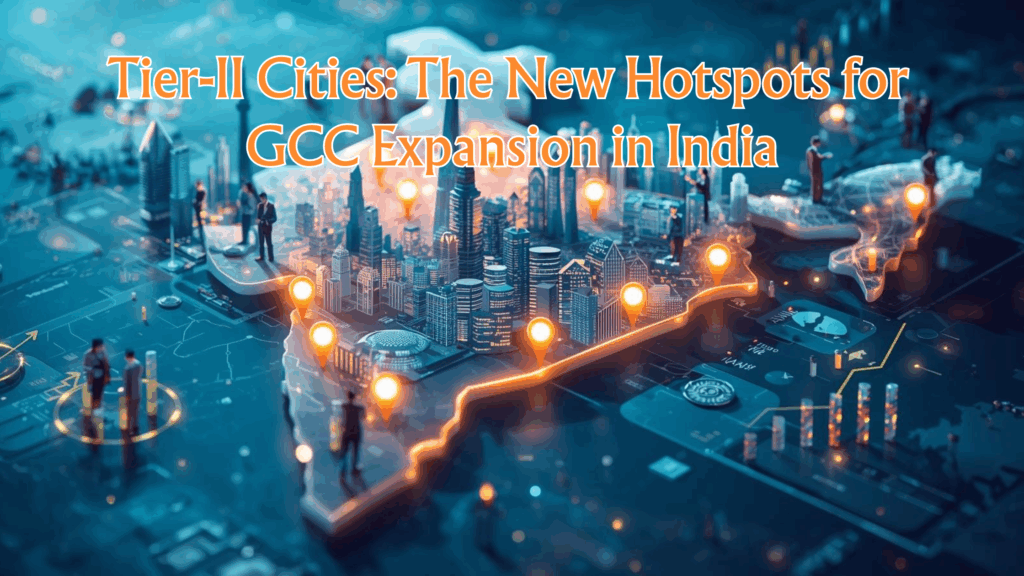
India has already established itself as the global hub for Global Capability Centers (GCCs), with Tier-I cities like Bengaluru, Hyderabad, and Delhi NCR leading the way. However, a powerful shift is now underway. By 2025, Tier-II cities will emerge as the new hotspots for GCC expansion in India, offering a balance of cost savings, talent availability, and improved infrastructure.
According to NASSCOM, nearly 45% of new GCC setups in 2024 were established in Tier-II locations, proving that businesses are no longer limiting themselves to the metros. Cities like Pune, Coimbatore, and Lucknow are rapidly attracting multinational firms looking for scalable, innovation-driven talent hubs.
This shift isn’t just about cost arbitrage—it’s about long-term strategic growth. As GCCs evolve from back-office functions to innovation-driven powerhouses, Tier-II cities are positioning themselves as the future growth engines of GCC expansion in India.
Why GCCs Are Looking Beyond Metros
For more than a decade, India’s GCC story has been dominated by Tier-I cities. Bengaluru, Hyderabad, and Chennai were natural choices due to their mature IT ecosystems. But in 2025, cracks are showing:
- Rising Costs in Metros
Real estate and salary expenses in metros have climbed significantly, making it harder for companies to maintain cost efficiency. - Saturation & Attrition
The intense competition for talent in metros has driven attrition rates higher, with skilled professionals often switching jobs for marginal hikes. - Infrastructure Pressure
Congested traffic, high population density, and stretched public infrastructure make scaling difficult in Tier-I hubs. - Talent Diversification
Meanwhile, Tier-II cities are producing a steady stream of engineering and management graduates, many of whom prefer to stay closer to their hometowns instead of migrating to metros. - Government Push
State governments are promoting special economic zones (SEZs), IT parks, and tax benefits in smaller cities to attract GCC investments.
This combination of cost, talent, and policy incentives explains why GCC expansion in India is now shifting beyond Tier-I cities.
Top Tier-II GCC Hotspots in India
As India’s GCC ecosystem matures, the growth story is no longer confined to the metros. A mix of talent availability, infrastructure upgrades, and government incentives is making Tier-II cities the new hotspots for GCC expansion in India. Let’s look at the most promising locations:
Hyderabad: The Emerging GCC Powerhouse
While traditionally considered a Tier-I city, Hyderabad is witnessing a second wave of GCC expansion. Its strong IT infrastructure, affordable real estate compared to Bengaluru, and proactive government policies have made it home to global leaders in cybersecurity, AI, and pharma-tech. Companies are scaling operations here to build innovation hubs, not just back-office centers.
Pune: The Auto-Tech & IT Blend
Pune combines a robust talent pool with its reputation as an automotive and IT hub. Engineering colleges churn out highly skilled graduates, while the city’s ecosystem supports GCCs in product engineering, fintech, and mobility solutions. Pune offers the perfect balance of Tier-I scale with Tier-II cost advantages.
Coimbatore: The Manufacturing + IT Hybrid
Known as the “Manchester of South India,” Coimbatore is fast evolving into a GCC destination for companies seeking both engineering expertise and IT services. Its industrial base, coupled with a growing IT talent pipeline, makes it attractive for engineering design centers and product R&D.
Lucknow: North India’s Rising GCC Hub
Lucknow is emerging as the preferred GCC base in North India. Improved air connectivity, expanding IT parks, and lower attrition rates are fueling its rise. With support from Uttar Pradesh’s IT & Startup policies, Lucknow is positioning itself as a cost-effective alternative for companies seeking stable, long-term GCC operations.
Other Rising Stars: Bhubaneswar, Chandigarh, and Nagpur
- Bhubaneswar: Supported by Odisha’s focus on IT/ITeS growth, it offers a young, English-speaking workforce.
- Chandigarh: A well-planned city with strong educational institutions, drawing GCCs in analytics and back-office functions.
- Nagpur: Strategically located in central India, Nagpur offers low operational costs and growing connectivity, making it a hidden gem for GCC expansion.
Key Advantages of Tier-II Cities for GCC Expansion in India
Global Capability Centers in India are increasingly turning to Tier-II cities for their next phase of growth. Beyond decongesting metros, these locations offer strategic advantages that directly impact cost, talent, and retention.
1. Cost Efficiency
Operating in Tier-II cities can cut real estate and operational costs by 30–40% compared to Tier-I hubs. This cost arbitrage allows GCCs to reinvest savings into innovation, digital transformation, and employee upskilling.
2. Access to Fresh Talent
Tier-II cities are home to a steady pipeline of engineering and IT graduates from local universities and institutes. Companies benefit from a younger workforce that is eager to learn and adapt to niche skills like AI, cybersecurity, and cloud computing.
3. Low Attrition Rates
Unlike metros, where attrition rates are notoriously high, Tier-II cities enjoy greater workforce stability. Employees are less likely to switch jobs frequently, ensuring better knowledge retention and reduced hiring costs for GCCs.
4. Government Incentives & SEZs
State governments are offering tax breaks, special economic zones (SEZs), and infrastructure support to attract GCCs. This policy push is making Tier-II destinations investment-friendly and future-ready.
5. Better Work-Life Balance
Tier-II cities provide a less stressful lifestyle compared to metro congestion. Employees enjoy shorter commutes, affordable housing, and stronger community bonds, translating to higher job satisfaction and productivity.
Challenges for Tier-II GCC Expansion
While Tier-II cities in India are fast emerging as attractive destinations for Global Capability Centers, the journey is not without hurdles. Companies need to be aware of the potential roadblocks before making large-scale investments.
1. Infrastructure Gaps
Despite rapid development, many Tier-II cities still face limitations in airport capacity, global flight connectivity, and public transport. For GCCs with international stakeholders, this can pose challenges in business travel and client engagement.
2. Leadership Talent Concentration in Metros
Senior leaders and experienced executives often prefer the professional ecosystem and lifestyle options of Tier-I cities. This creates a leadership talent gap in Tier-II hubs, making it harder for companies to establish strong on-ground leadership teams.
3. Ecosystem Maturity
Compared to metros, Tier-II cities often lack a fully developed vendor ecosystem, skilling partners, and training institutes. This can delay ramp-ups, slow down innovation programs, and increase dependency on external resources.
Despite these challenges, the advantages of Tier-II GCC expansion often outweigh the risks—especially with the right talent partner and government incentives.
Industry Outlook & Future Trends for Tier-II GCCs
The next five years will be crucial for the growth of Tier-II cities as GCC destinations in India. Backed by digital transformation, government initiatives, and rising global demand, the outlook is highly positive.
1. Rapid Workforce Growth
According to NASSCOM, India’s GCC workforce is projected to cross 4.5 million by 2030, with a significant share coming from Tier-II hubs. Companies are increasingly tapping fresh engineering and IT graduates from these cities.
2. AI-Driven Operations
Global Capability Centers are moving beyond traditional cost-saving functions to become innovation-driven hubs. Tier-II GCCs will leverage AI, automation, and cloud adoption to streamline hiring, project execution, and business processes.
3. Global Innovation Hubs, Not Back Offices
The perception of GCCs has shifted. By 2025 and beyond, they will no longer be seen as “support centers.” Instead, Tier-II GCCs will directly contribute to product engineering, R&D, and digital transformation, strengthening India’s position as a global innovation powerhouse.
4. Policy Push & Ecosystem Development
With Digital India, Smart Cities, and state-level IT policies, Tier-II cities will continue to attract new GCC investments. Governments are providing SEZ benefits, tax incentives, and infrastructure upgrades, making expansion more sustainable.
In short, the future of Global Capability Centers in India lies in Tier-II growth corridors, where cost efficiency meets innovation potential.
Where Innomax Skills Fits In
As Global Capability Centers in India continue to expand into Tier-I and Tier-II cities, one of the biggest challenges they face is finding the right talent at the right time. This is where Innomax Skills acts as a trusted partner:
- 48-hour hiring turnaround for critical roles.
- Niche tech talent expertise across AI, Cloud, Cybersecurity, and Digital Engineering.
- End-to-end compliance support, ensuring smooth operations for GCCs.
- Focus on GCC growth hotspots, helping organizations tap into emerging Tier-II talent pools.
With our tailored staffing solutions, GCCs can scale faster, reduce hiring delays, and stay competitive in 2025’s fast-changing landscape.
Conclusion
India’s journey as the hub for Global Capability Centers (GCCs) is only getting stronger. With Tier-II cities rising as new hotspots, advanced technologies fueling innovation, and a growing talent pool, the country is set to redefine the way GCCs operate in 2025 and beyond.
Yes, challenges like niche skill shortages and infrastructure gaps remain, but with the right partners, GCCs can overcome them and unlock massive growth.
At Innomax Skills, we align with this vision by helping GCCs hire the right talent, faster—so that expansion plans don’t just remain on paper, but translate into real success.
FAQs on Global Capability Centers in India and Tier-II Cities
1. What are Global Capability Centers (GCCs) in India?
Global Capability Centers in India are offshore units of multinational companies that handle IT, business operations, R&D, and innovation.
2. Why are Tier-II cities becoming GCC hotspots in India?
Tier-II cities offer cost efficiency, a strong talent pool, lower attrition, and government incentives, making them attractive for GCC expansion.
3. Which Tier-II cities are leading in GCC growth?
Pune, Coimbatore, Lucknow, and Bhubaneswar are emerging as key GCC hubs due to strong infrastructure and skilled workforce availability.
4. Is Hyderabad considered a Tier-II GCC city?
Hyderabad is officially a Tier-I city, but it is still growing as a GCC powerhouse, attracting top companies for IT, AI, and R&D operations.
5. What advantages do Tier-II cities offer over metros for GCCs?
Lower real estate costs (30–40% cheaper), better work-life balance, and fresh talent supply make Tier-II cities highly attractive for GCC expansion.
6. What challenges do GCCs face in Tier-II cities?
The main challenges include infrastructure gaps, ecosystem maturity, and limited leadership talent compared to metro cities.
7. How big is the GCC market in India?
India currently hosts over 1,600 GCCs, and the number is expected to cross 2,000 by 2030, employing more than 4.5 million professionals.
8. Why do multinational companies choose India for GCCs?
India offers skilled tech talent, cost efficiency, government support, and a strong digital ecosystem, making it the top global GCC destination.
9. What industries are driving GCC growth in Tier-II cities?
IT services, product engineering, manufacturing, fintech, and AI-driven R&D are major sectors driving GCC growth in smaller cities.
10. How does Innomax Skills support GCC expansion in India?
Innomax Skills helps GCCs with fast hiring, niche tech talent acquisition, and end-to-end compliance support for smooth expansion into Tier-II cities.